1. Industry-Specific Requirements for Physiotherapy Flexible PCBs
Procurement professionals sourcing flexible printed circuits for physiotherapy and wellness devices face unique challenges. These applications—such as red light therapy belts, muscle stimulation pads, and heat therapy wraps—demand a combination of electrical reliability, mechanical flexibility, and regulatory compliance.
Key requirements include:
- Flexibility and durability: The PCB must withstand repeated bending and twisting without electrical failure, often for thousands of cycles.
- Biocompatibility: Materials should be non-toxic and skin-safe, typically meeting RoHS and REACH directives.
- Efficient heat dissipation: For LED-based therapy devices, the PCB must manage thermal loads to prevent overheating and ensure consistent light output.
- Regulatory certifications: For North American market access, components should carry UL recognition (e.g., FPC-UL certificate E530809).
This product operates in customized processing on demand mode, which requires supporting equipment configured for this purpose.
2. Essential Supplier Selection Criteria
When evaluating flexible PCB suppliers for physiotherapy applications, three core capabilities are critical:
- Domain experience: A supplier with a proven track record in medical and wellness electronics can better anticipate design challenges. For example, M2PCB, founded in 2000, has an 8000m² factory, 200 employees, and an annual output of 360,000 square meters, with over 30 engineers dedicated to R&D.
- Certification and compliance: The supplier should hold relevant certifications. M2PCB holds an FPC-UL certificate (E530809) for flexible circuits and IATF 16949:2016 (certificate T184452) for automotive-grade quality management, which also applies to high-reliability medical devices.
- Robust quality control: Quality control procedures include 100% test, Fly-probe, Electronic testing, and AOI test. The test method used for this PCB board is Flying Probe Test.
Additionally, the manufacturer's products are exported to markets including Europe, the United States, Brazil, and the Middle East, demonstrating a global supply chain capability.
3. Case Study: Red Light Therapy Belt for Waist Pain Relief
A U.S.-based client approached M2PCB to develop a flexible LED PCB for a red light therapy belt intended to relieve waist pain. The product needed to be thin, flexible, and safe for prolonged skin contact.
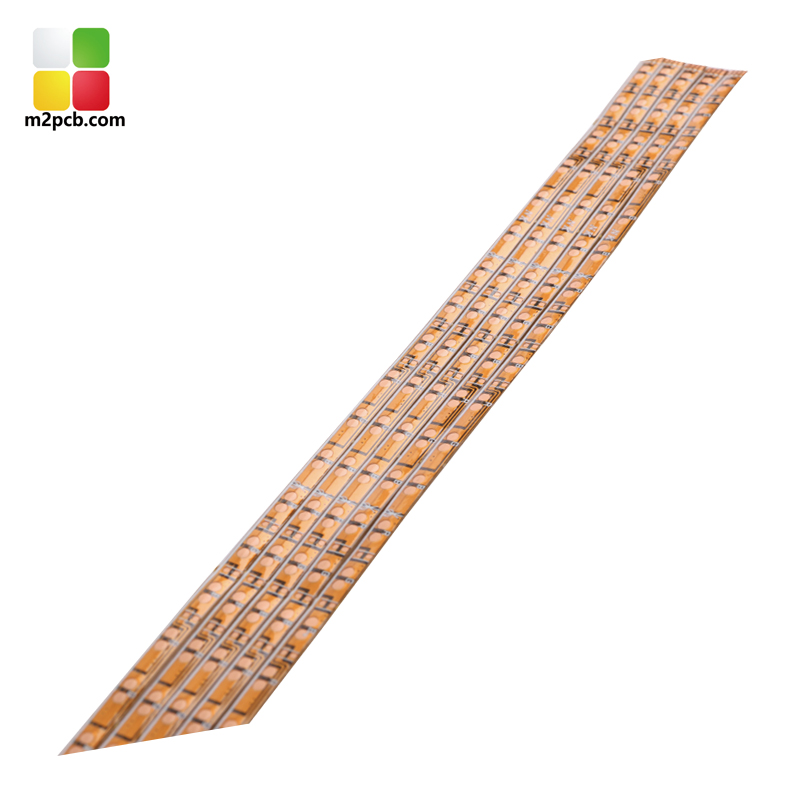
M2PCB delivered a custom solution using a Flexible LED PCB with a maximum width of 240mm, and the product length can be 1m or supplied by reel. The board was designed to support multiple wavelengths (red and infrared), with controlled power distribution to ensure uniform light output.
The project involved an order quantity of 500,000 pieces over two years. The client reported that the device was highly favored by European and American users, with satisfactory results in promoting blood circulation, relieving muscle tension, and improving indigestion.
This case demonstrates the application of flexible LED PCBs in a product designed to relieve waist pain in the physiotherapy industry.
4. Key Collaboration Points for Buyers
To ensure a smooth partnership with a flexible PCB supplier, buyers should address the following:
- Define standards upfront: Clearly specify required certifications (e.g., FPC-UL, RoHS, REACH) and any industry-specific standards (e.g., IEC 60601 for medical devices).
- Share detailed technical files: Provide complete PCB layout data (Gerber, ODB++, etc.) and a Bill of Materials (BOM) with component specifications and package sizes. For SMT processing, a BOM list is required.
- Conduct site audits or virtual assessments: For complex projects, consider visiting the factory or performing a video walkthrough to evaluate production capabilities and quality systems.
- Establish an after-sales support plan: Confirm the supplier's ability to provide remote technical support and quick turnaround for reorders or repairs. M2PCB, for example, offers remote support and accepts payment via bank transfer or credit card with a minimum order quantity of 5 pieces.
By focusing on these criteria, procurement teams can identify suppliers that align with the unique demands of physiotherapy and wellness devices, reducing risk and accelerating time to market.