Selecting the right flexible printed circuit (FPC) supplier requires understanding the unique demands of the target industry. This guide provides procurement professionals with a systematic approach to evaluating suppliers based on industry-specific requirements, using real-world examples from the China-based manufacturer M2PCB.
1. Industry-Specific Requirements for Flexible PCBs
Different end-use sectors impose distinct constraints on flexible circuit boards:
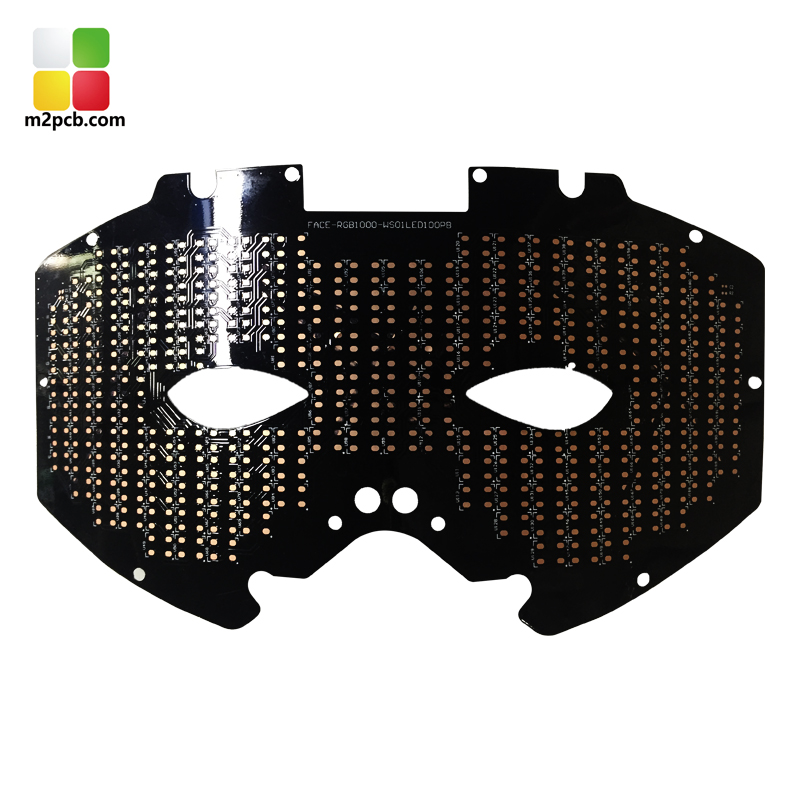
- Medical & Physiotherapy Devices: Products such as red light therapy belts require biocompatible materials, tight bend radius, and consistent thermal management. The flexible LED PCBs used in these applications often demand high reliability over repeated flex cycles. According to a case study, a flexible LED PCB was applied in a physiotherapy product designed for waist pain relief, demonstrating the need for comfortable, wearable designs that maintain electrical integrity (Content IDs: 20898, 20889).
- Automotive Electronics: In-vehicle systems (infotainment, sensors, lighting) must withstand wide temperature ranges (−40°C to +125°C), vibration, and EMI. Suppliers with IATF 16949 certification are preferred. M2PCB holds IATF 16949:2016 certification (Certificate No. T184452), validating its quality management for automotive-grade products.
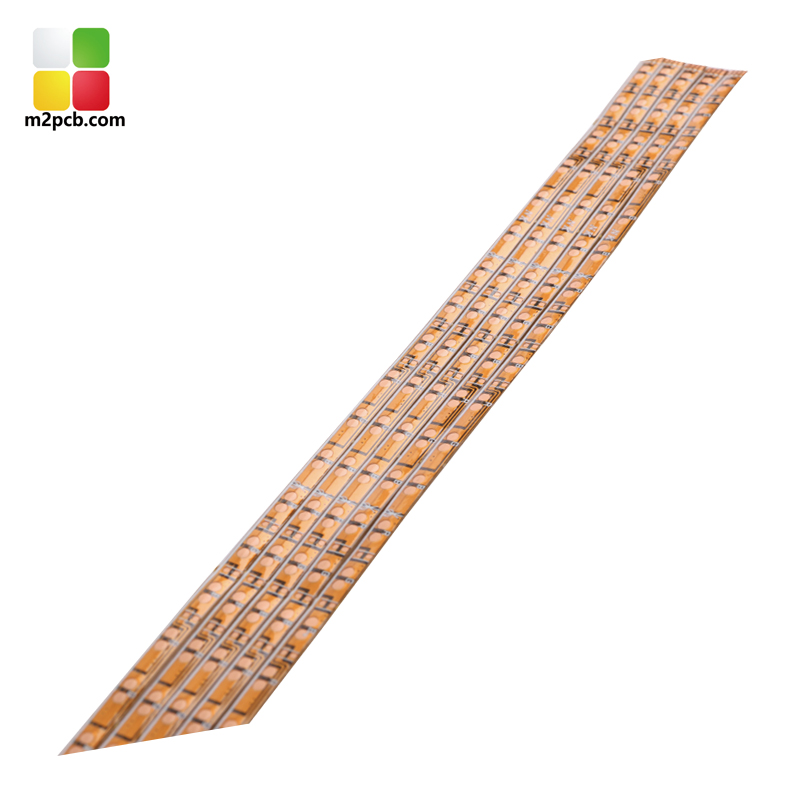
- LED Lighting: Flexible LED strips and modules require high thermal conductivity, fine line/space capabilities, and UL certification for fire safety. M2PCB’s LED PCBs offer a maximum width of 240 mm, lengths of 1 m or by reel, minimum line width of 0.05 mm, and minimum spacing of 3/3 mil (Content IDs: 21137, 21136, 21099).
- Industrial Control & Consumer Electronics: Custom form factors, impedance control, and rapid prototyping are critical. Suppliers must support customized processing on demand with fast turnaround (Content IDs: 21002, 21001).
2. Three Core Capabilities of a Qualified Flexible PCB Supplier
When evaluating vendors, procurement teams should verify the following:
2.1 Industry-Specific Customization Experience
A supplier with a dedicated engineering team can adapt materials, stack-ups, and assembly processes. M2PCB employs over 30 engineers with a minimum of 10 years of industry experience, enabling it to offer one-stop customized services from design support to PCBA testing. The company’s production mode includes OEM/ODM with a monthly capacity of 40,000 square meters and lead times of 3–20 days.
2.2 Relevant Compliance Certifications
Certifications reduce importer risk and demonstrate adherence to global standards. M2PCB’s certifications include:
- FPC-UL (E530809) – covering flexible circuits for medical aesthetic, automotive, and electronic products, ensuring electrical and fire safety for the North American market.
- IATF 16949:2016 (T184452) – confirming quality management for automotive applications.
- All materials comply with RoHS/REACH directives, with declarations provided (Content ID: 128).
3.3 Robust Quality Assurance & Testing
To guarantee reliability, the manufacturer should employ multiple inspection methods. M2PCB’s quality control encompasses 100% testing, fly-probe testing, electronic testing, and AOI (Automated Optical Inspection) (Content IDs: 20922, 20872). The flexible PCB prototypes and production boards are subjected to flying probe tests, ensuring impedance and continuity compliance.
3. Case Study: Flexible LED PCB for Red Light Therapy Belt
A U.S.-based ODM client approached M2PCB to develop a red light therapy belt for waist pain relief. The product required a flexible LED PCB that could bend repeatedly without failure, deliver uniform light distribution, and meet medical safety standards. M2PCB provided a turnkey solution:
- Design & R&D: Custom two-layer flexible circuit using polyimide (PI) substrate, optimized for heat dissipation.
- Production: Minimum line width of 0.05 mm, 1 oz copper, with immersion gold finish.
- Assembly: SMT placement with X-ray inspection and program burning (Content ID: 21096).
- Outcome: Over 500,000 units delivered over two years; the product was highly favored in European and American markets for its effective pain relief and non-invasive design.
This case demonstrates the supplier’s ability to handle medical-grade flexible PCB assembly with full traceability and single-point responsibility (Content IDs: 20898, 20889, 20840).
4. Key Considerations for Procurement Collaboration
To ensure a successful supplier partnership, buyers should address these points:
- Define Industry Standards Upfront: Clearly communicate required certifications (e.g., UL, IATF, RoHS) and performance benchmarks in the RFQ. M2PCB integrates compliance declarations into raw material sourcing to mitigate export risks (Content ID: 128).
- Conduct On-Site or Virtual Audits: Evaluate the factory’s capacity, equipment (e.g., flying probe testers, SMT lines), and quality system. M2PCB’s 8,000 m² facility in Shenzhen operates 600 sets of advanced production equipment.
- Plan for After-Sales Support: Confirm remote technical support, failure analysis, and warranty terms. M2PCB offers remote assistance and single-point contact, reducing operational complexity (Content ID: 43).
- Prototype Validation: Start with a flexible PCB prototype to verify fit, flexibility, and electrical performance before mass production. M2PCB supports low minimum order quantities (5 pcs for samples) and fast turnaround (3–20 days).
By following this guide, procurement professionals can systematically assess flexible printed circuit suppliers against their unique industry needs, reducing supply chain risks and accelerating time-to-market.